

Our Sheitel Collection
We built Sparx for the medical hair loss community. Women who wear wigs not by choice, but by necessity — and who deserve so much better than what the industry has traditionally offered them.
What we didn't expect was how deeply that same mission would resonate with Jewish women.
Because here's the truth: the frustrations are identical. We're all hot. We're all itchy. We're all quietly enduring a wig that wasn't designed with our real, daily lives in mind — but we wear it anyway, because we have to. Whether that's driven by hair loss or by halacha, the experience of being a woman who must wear a wig is one we all share.
The difference is that a sheitel carries an additional layer of meaning. It is a garment of faith, of dignity, of commitment to tzniut. It deserves to be treated that way — not just in spirit, but in the quality of every single stitch.
That's why every Sparx wHAIRable is crafted to the same exacting standard that Jewish law requires. Kosher certified, ethically sourced, and built with the same innovative comfort technology we developed for the medical community. Because whether you wear a wig out of necessity or devotion, you deserve to forget it's even there.
Our stretch lace cap features a new innovative spandex lace that it is super lightweight, breathable and flexible. The wig features a soft Swiss lace natural looking hairline along with a true French drawn top, which looks like real scalp. The entire cap is double lined with extra comfort and finally unique anti slip grippers pattern is added inside along the front and nape to increase security without comprising breathability.






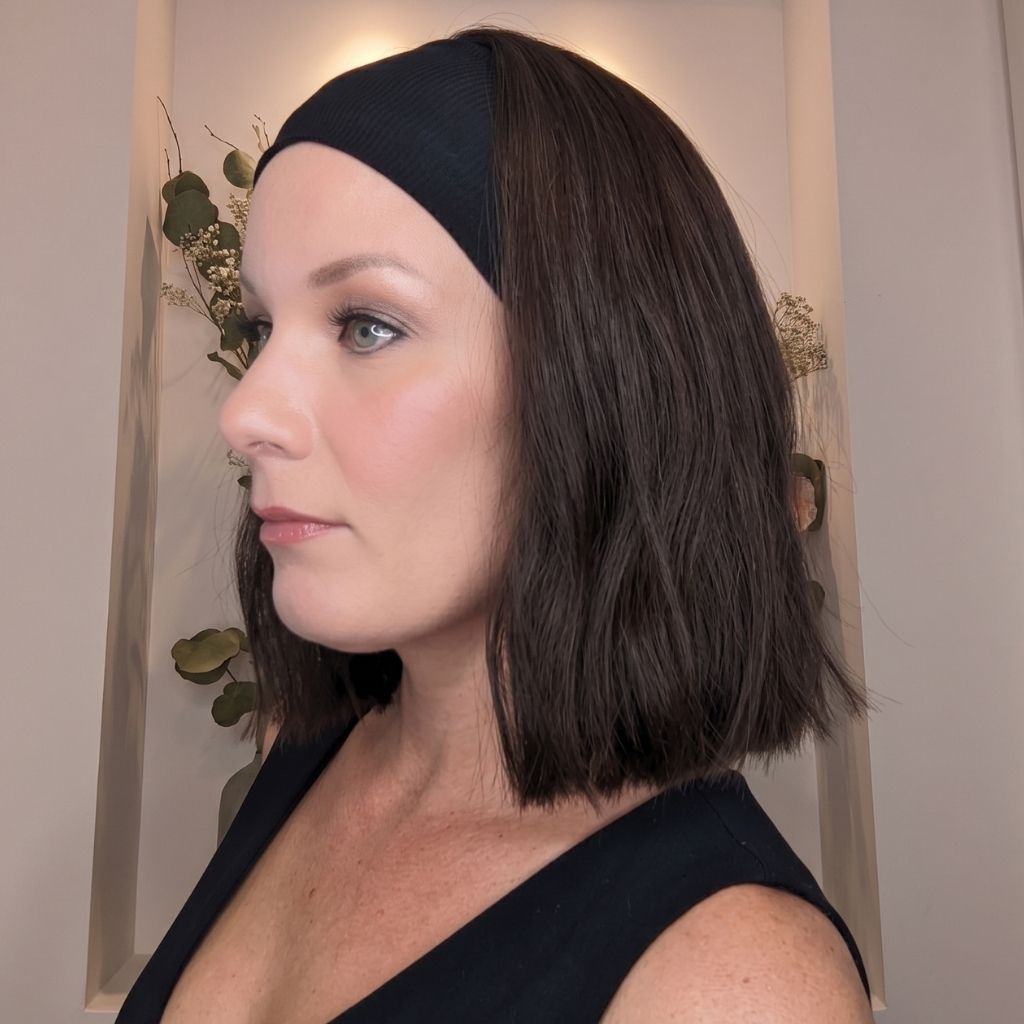
The wig that started a revolution. Born from real life, our patent-pending Headband Wig was pioneered by our founder Allison — a woman living with Alopecia Universalis — who believed you should never have to choose between comfort, security, and style.
Traditional wigs were holding women back. Scratchy lace, hard plastics, and caps that felt more like helmets than hair. So we started over. The Headband Wig is built on a buttery-soft, brushed jersey knit base — the same thoughtful engineering you'd find in elite activewear — that stretches, breathes, and within 20 minutes gently molds to the unique contours of your head for a fit that feels like it was made just for you. Because it is.
Wear it to the gym, to yoga, through the rain, in the sauna, to bed — this wig keeps up without skipping a beat. No glue, no adhesive, no slipping. Just soft, secure, beautiful hair that moves freely with your life.
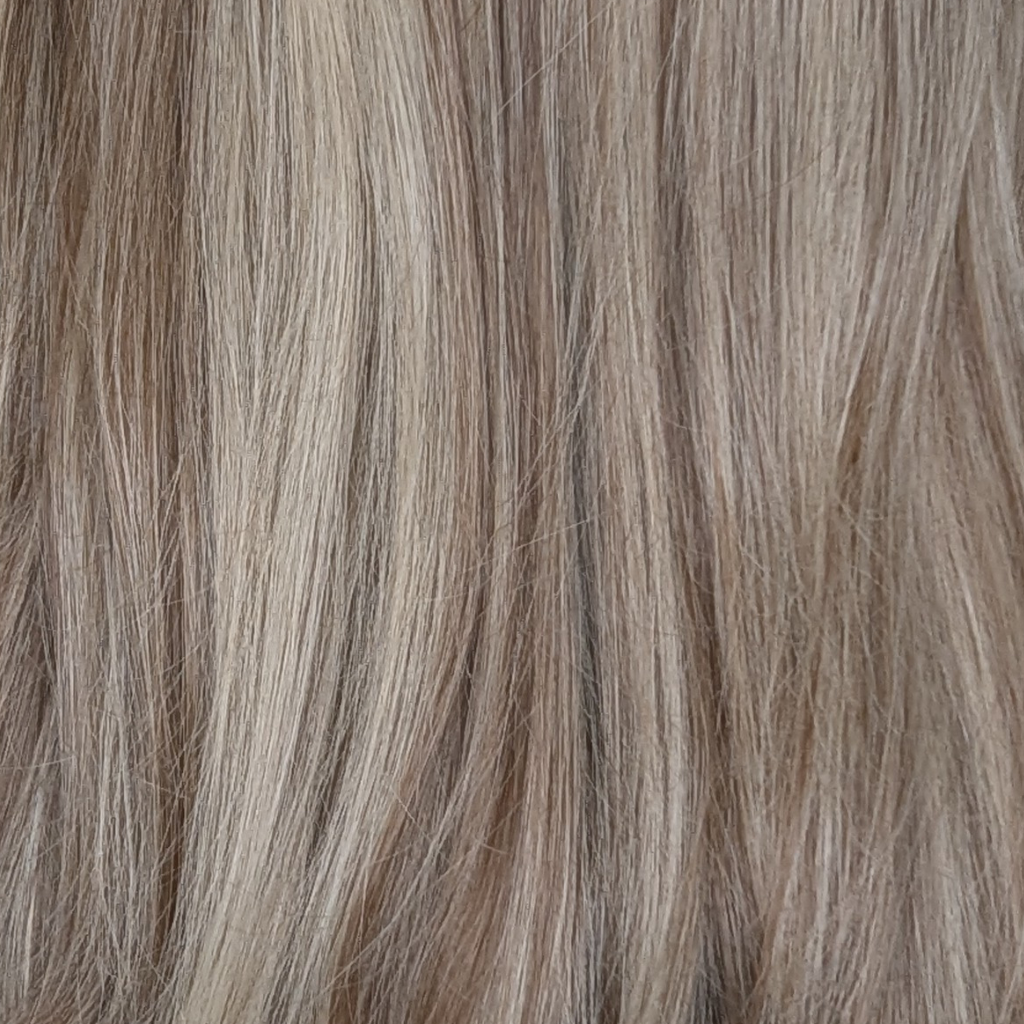
Available in two styles — long and bob — and in three hair types across eleven signature shades, so you can find the perfect match for who you are and how you live.
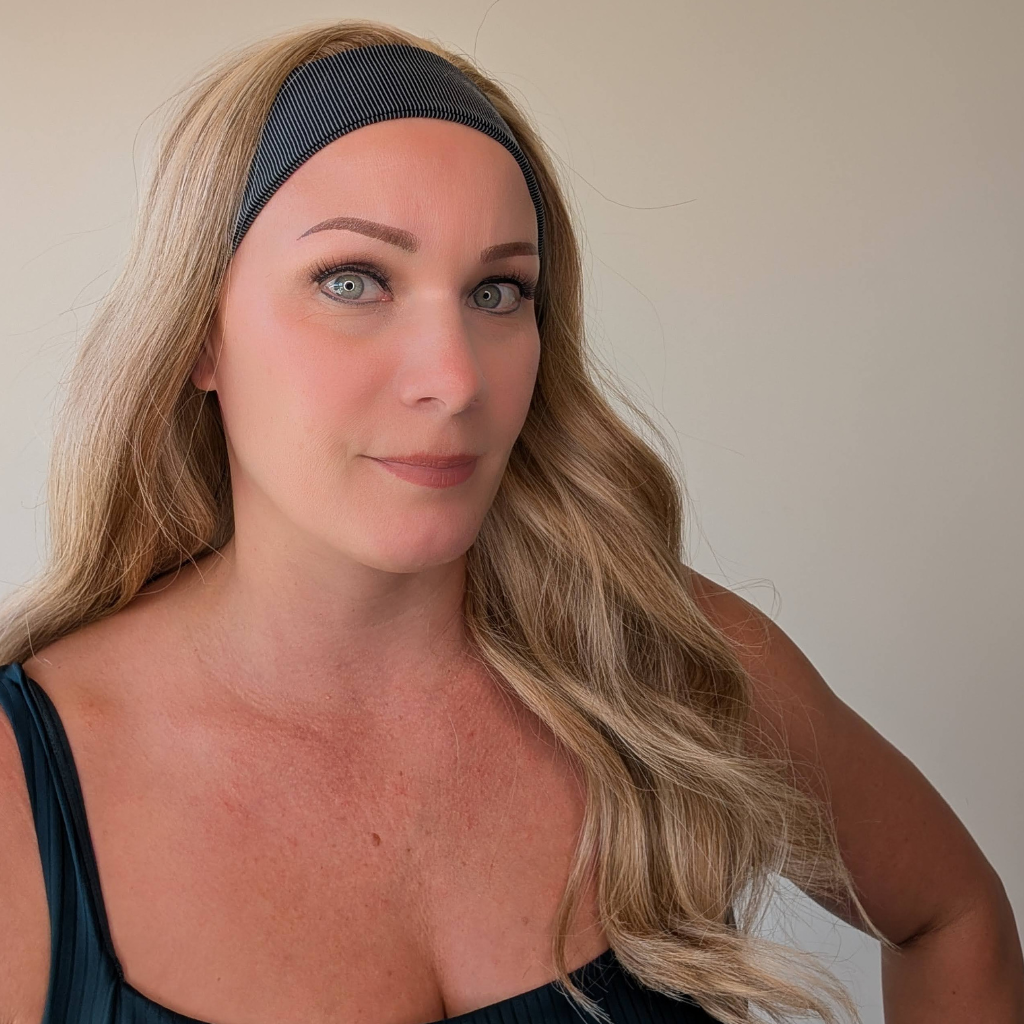
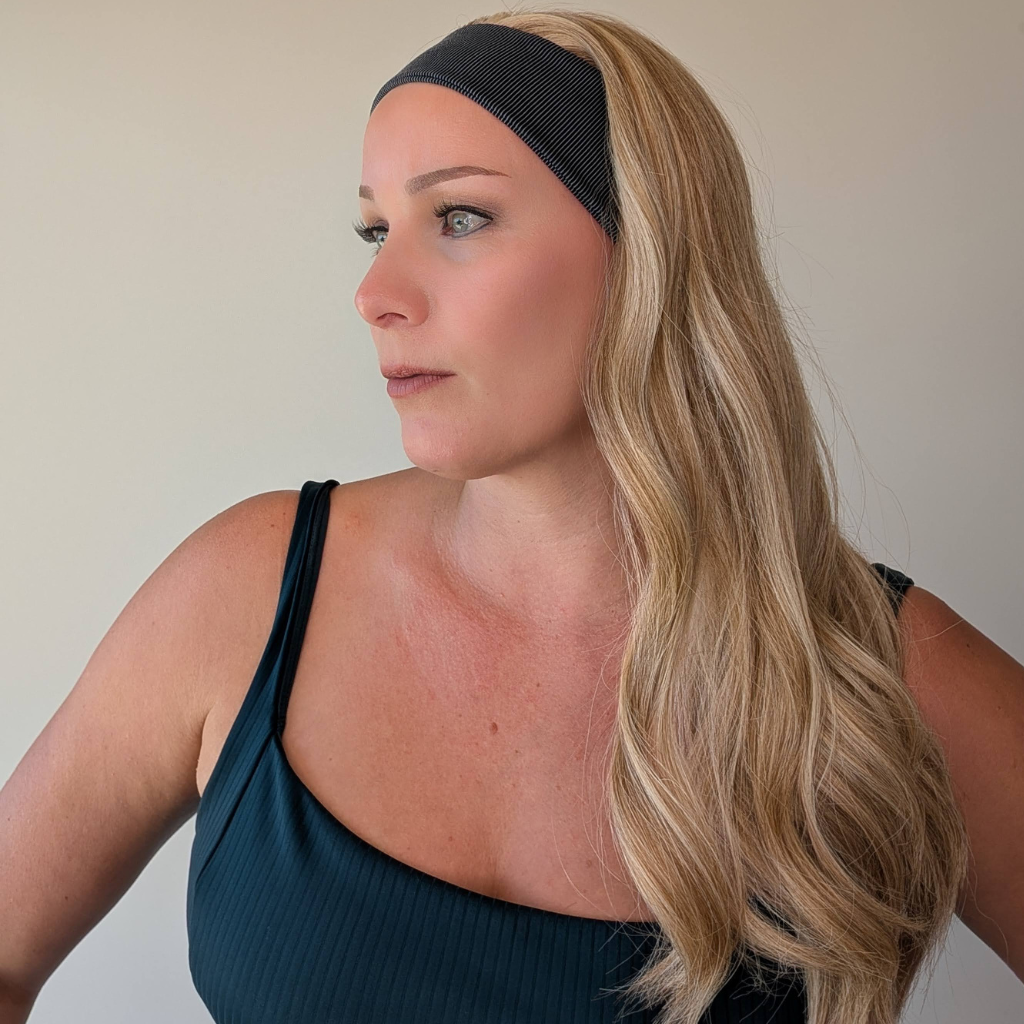
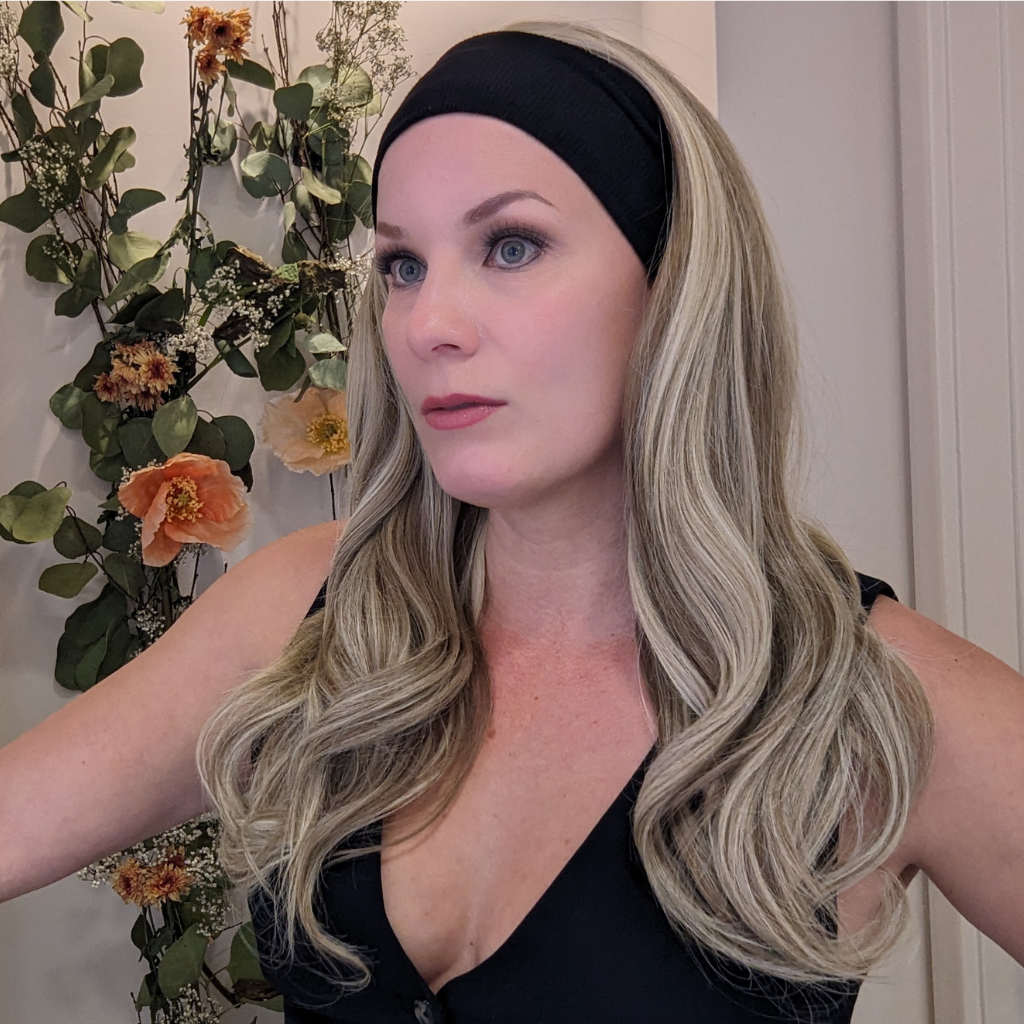
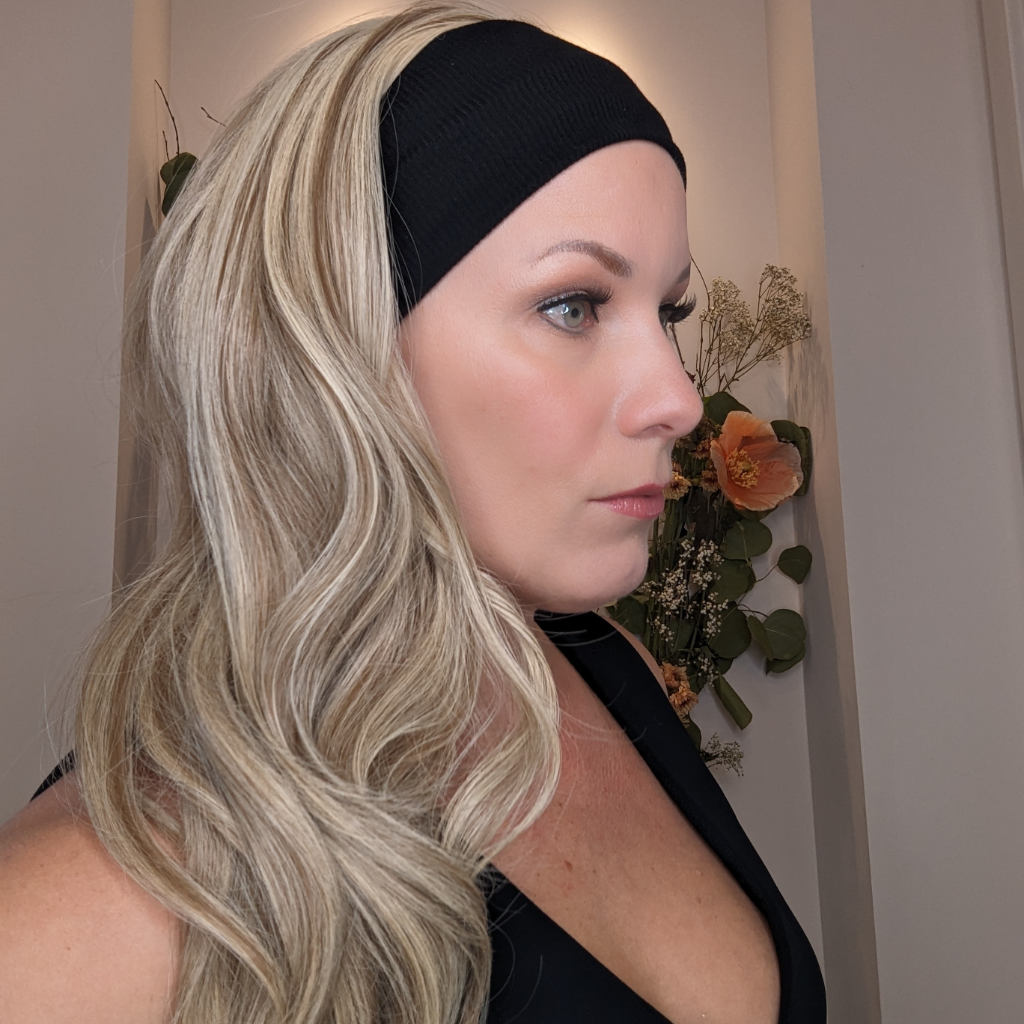



Why do Jewish women wear wigs?
According to Jewish law, once a woman is married, she is required to cover her natural hair as an act of tzniut, or modesty. This sacred practice creates a boundary of privacy and respect, reserving the beauty of her hair for her husband. The sheitel, or kosher wig, allows a woman to uphold this important religious principle while navigating the public and professional worlds with confidence and grace. It is not just a covering, but a garment that signifies her commitment and her status.
Sheitel FAQs
Sheitel FAQs
A sheitel is the Yiddish word for a wig worn by some married Orthodox Jewish women. According to Jewish law (halacha), married women are required to cover their hair as a sign of modesty (tzniut). A sheitel allows a woman to adhere to this religious tradition while maintaining a natural and polished appearance in public and professional settings. It is considered a garment that signifies her commitment to her faith and marital status.
Not every wig qualifies as a sheitel. For a wig to be considered a proper sheitel, it must be "kosher." This primarily involves a certification from a Rabbinical authority confirming that the hair used in the wig was not sourced from rituals considered idolatrous in Judaism, such as hair from Hindu temples. This ensures the sheitel is religiously and ethically "clean" for the wearer. Therefore, while a sheitel is a type of wig, a standard wig without this specific kosher certification cannot be considered a sheitel.
Sheitel wigs are often associated with higher quality for several reasons. Because they are intended for daily, long-term wear, manufacturers tend to use premium materials, such as high-grade human hair and more advanced cap constructions.
The process of obtaining a kosher wig certification also involves a high level of scrutiny over the sourcing and production process. This attention to detail often results in a more durable, realistic, and comfortable product compared to many standard mass-market wigs.
We are incredibly proud to say that our wigs are kosher certified.
Like medical wigs, the cost of a sheitel can vary greatly depending on the quality of hair, cap construction, length, and brand. Prices typically start around $600 for basic models and can exceed $6,000 for premium sheitels made with top-grade European human hair. Factors like cap design, length, and kosher certification can also influence the final price.
A kosher certified sheitel comes with documentation or labeling from Rabbinical authorities, verifying that the hair used has not been sourced from prohibited religious rituals, such as offerings in Hindu temples.
The certification process involves strict oversight to ensure ethical sourcing and compliance with Jewish law. When purchasing a sheitel, ask the retailer or manufacturer for their kosher certificate and review it carefully. Reliable sellers are transparent about their sourcing and the Rabbinical supervision involved, so always request proof if you require a kosher wig for religious reasons.
Yes, we order from a manufacture that is certified, moreover, we order our wigs from a specific division within the factory that specializes in Kosher Certified Sheitels. Additionally, we are in the process of receiving our own brand-specific kosher certification.